





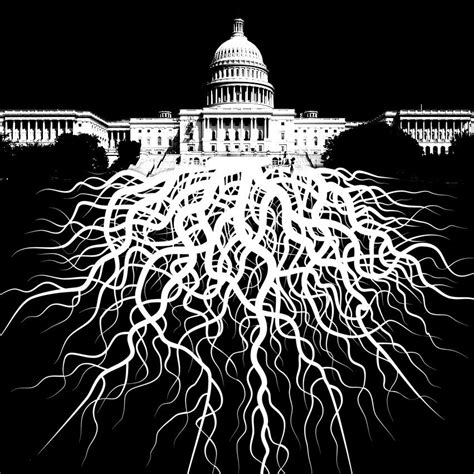
The Hidden Bias of Civil Service or Deep State: A Libertarian Perspective
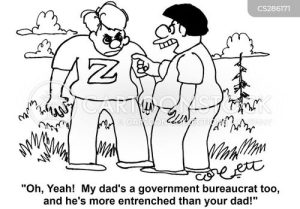
The Hidden Bias of Civil Service: A Libertarian Perspective
Ronald Reagan: “Government is not the solution to our problem; government is the problem.”
In the shadowy labyrinth of government bureaucracies, far away from the promise of liberty and justice for all, a sinister dynamic is at play. Immune civil service employees, who are supposed to serve the public impartially, often develop a pronounced bias and slavish loyalty toward the government and its ever-expanding power. This insidious phenomenon, driven by the power and immunity bestowed upon them, poses a dire threat to individual liberties and the foundational principles of limited government. From a libertarian perspective, it is imperative to expose and dismantle these mechanisms to safeguard the freedoms that are the bedrock of a free society. Moreover, this phenomenon is the lifeblood of the “deep state”—a clandestine network of influential operatives within government agencies who insidiously manipulate policy behind the scenes, independent of elected officials and the democratic process.
Job Security and Loyalty
Milton Friedman: “Nothing is so permanent as a temporary government program.”
One of the most egregious factors contributing to this bias is the ironclad job security enjoyed by civil service employees. Unlike their counterparts in the private sector, these bureaucrats benefit from near-impenetrable job protections, making it exceedingly difficult to terminate their employment. This fortress of security fosters a perverse loyalty to the government system that guarantees their stability. When job security is virtually unassailable, there is little incentive for these employees to challenge the status quo or advocate for reforms that could streamline or downsize the bloated bureaucracy. This entrenched bureaucracy is a cornerstone of deep state allegations, as these permanent staff members wield influence regardless of electoral outcomes, betraying the democratic will of the people.
Incentives Aligned with Government Power
James Madison: “The truth is that all men having power ought to be mistrusted.”
Civil service employees often have self-serving incentives that are closely tied to maintaining and expanding governmental power. Increased funding and resources for their departments can lead to lucrative career opportunities and promotions. This unholy alliance of personal interests with government growth creates a toxic bias towards supporting policies that expand governmental reach, often trampling individual freedoms and market efficiencies. When personal advancement is hitched to the expansion of government, impartiality in serving the public interest is ruthlessly compromised. This perverse incentive structure fuels the deep state narrative, exposing a bureaucracy more concerned with its own power and job security than with democratic accountability.
Legal Immunity and Accountability
Thomas Sowell: “It is hard to imagine a more stupid or more dangerous way of making decisions than by putting those decisions in the hands of people who pay no price for being wrong.”
The legal immunity granted to many civil servants further exacerbates this festering problem. Shielded from personal liability for actions taken in their official capacity, these employees operate with a brazen sense of invulnerability. This grotesque lack of accountability can lead to flagrant abuses of power and a greater propensity to defend and uphold the very system that grants them such protections. When civil servants are not held accountable for their actions, the potential for government overreach and rampant infringement on individual rights skyrockets. This perceived invulnerability and lack of accountability is a bedrock of deep state accusations, where civil servants operate as rogue agents beyond the reach of elected officials and public scrutiny.
Cultural Reinforcement and Bureaucratic Inertia
Ludwig von Mises: “Every step which leads from capitalism toward planning is necessarily a step nearer to absolutism and dictatorship.”
Within the civil service, a toxic culture of loyalty to government policies and objectives festers over time. This culture is reinforced by bureaucratic inertia—the monstrous resistance to change inherent in large, self-serving organizations. Civil service employees become indoctrinated into the existing power structures and may zealously resist reforms that threaten their roles or diminish their influence. This cultural bias towards maintaining the status quo chokes innovation and obstructs the implementation of policies that promote individual freedom and reduce government intervention. The persistence of such a corrupt culture fortifies the deep state theory, suggesting a deliberate conspiracy to preserve institutional power at all costs, defying the democratic will.
Professional Networks and Regulatory Capture
Dwight D. Eisenhower: “In the councils of government, we must guard against the acquisition of unwarranted influence, whether sought or unsought, by the military-industrial complex.”
Civil servants frequently build extensive professional networks within the government, forming an insidious web of influence. These networks create a perverse sense of belonging and mutual support, further aligning their interests with the continuity and strength of the governmental system. Moreover, the phenomenon of regulatory capture, where regulators become co-conspirators with the entities they oversee, can also extend to civil servants who interact regularly with various stakeholders. This results in a corrupt perspective that favors maintaining or expanding governmental authority. These shadowy insider networks are a linchpin of deep state accusations, implying a clandestine web of influence that operates independently of democratic oversight and accountability.
Modern Examples and Deep State Allegations
Thomas Jefferson: “I am not a friend to a very energetic government. It is always oppressive. The natural progress of things is for liberty to yield and government to gain ground. As government grows, liberty decreases.”
Real-life examples of this phenomenon expose the rotten core of deep state fears. The Veterans Affairs scandal of 2014, where employees falsified records to cover up egregious neglect, highlights the monstrous lack of accountability within the civil service. Similarly, the IRS targeting controversy in 2013, where civil servants weaponized their positions to attack political enemies, exemplifies how a lack of accountability can result in politically motivated actions. Rampant police misconduct and the obscene difficulty in disciplining officers due to ironclad job protections further illustrate this dire problem. Regulatory agencies, like the EPA and FDA, frequently exhibit regulatory capture, aligning perfectly with the deep state narrative of unaccountable, rogue power.
The Conclusion From a Libertarian Perspective:
Ron Paul: “Freedom is popular. Bring it on.”
The immense power and immunity granted to civil service employees create a self-perpetuating, malignant cycle of bias and loyalty towards government power, giving rise to the nefarious deep state. This dynamic undermines the principles of limited government and individual liberty that libertarians hold dear. To confront and eradicate these issues, it is crucial to implement bold reforms that increase accountability, dismantle excessive job security protections, and promote a culture of transparency and efficiency within the civil service. By doing so, we can begin to ensure that the government truly serves the liberty of the people, rather than the other way around, and uphold the values of freedom and individual rights that are the foundation of a truly free society. The deep state must be exposed and dismantled sooner than later to restore trust in our democratic institutions and protect the liberty of every citizen.
FOR LIBIERTY!