






Freedom And Independence Holiday Series: 3. Excessive Taxation And Spending


Freedom And Independence Holiday
On this Freedom And Independence Holiday season that runs from Juneteenth to Independence Day(June 19 to July 4), as we strive for a more perfect union, we celebrate our victories over governments that took our independence and individual freedoms. This is also the season to look critically at our government and its control over us, and to sound the alarm on the threat that centralizing this governmental control has on our freedom and independence. This is the perfect season to look at government from the libertarian perspective, for all humans are created equal!
As a libertarian, I am here to sound the alarm on the threat our federal government is to our independence and freedoms. So, from a libertarian perspective, I will address several threats posed by the federal government in a series of articles. These threats have been proven to be detrimental to individual liberty and the principles of libertarianism.
The good news is that each day is a new day to turn the titanic around and promote more freedom and independence. Join us in the Libertarian Party today and celebrate and defend our freedoms and independence.
Let’s delve into the third concern in this series, excessive taxation and spending.

Excessive Taxation and Spending
Libertarians oppose high levels of taxation and excessive government spending. Such practices hinder economic growth, discourage personal initiative, and limit individual prosperity. We advocate for fiscal responsibility, limited government budgets, and lower tax burdens to allow individuals to keep more of their hard-earned income. Here are some examples:
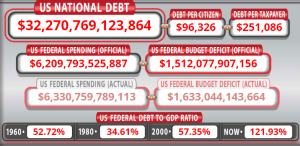
End of June, 2023
National Debt: Libertarians express concern over the growing national debt and deficit spending. We argue that excessive government spending, coupled with a tax system that fails to generate sufficient revenue to cover expenditures, burdens future generations with unsustainable levels of debt and limits economic growth.
Even with record revenue, the federal government still runs a deficit each year. It is obvious we cannot afford the government we have and the only way we can pay for it is to print money and dilute and destroy the value of the fiat currency the federal government forces us to use. There is no end in sight. Libertarians vehemently oppose this manipulation of our money and the drunkenness on power the federal government enjoys. We proclaim it is time to get sober and free the people from taxation that uses our own money to subjugate us.

Entitlement Programs: Libertarians point to the expansion of entitlement programs, such as Social Security, Medicare, and Medicaid, as examples of excessive government spending. We argue that while these programs may have ignorant noble intentions, their long-term costs and their impact on individual liberty and economic freedom are often overlooked.
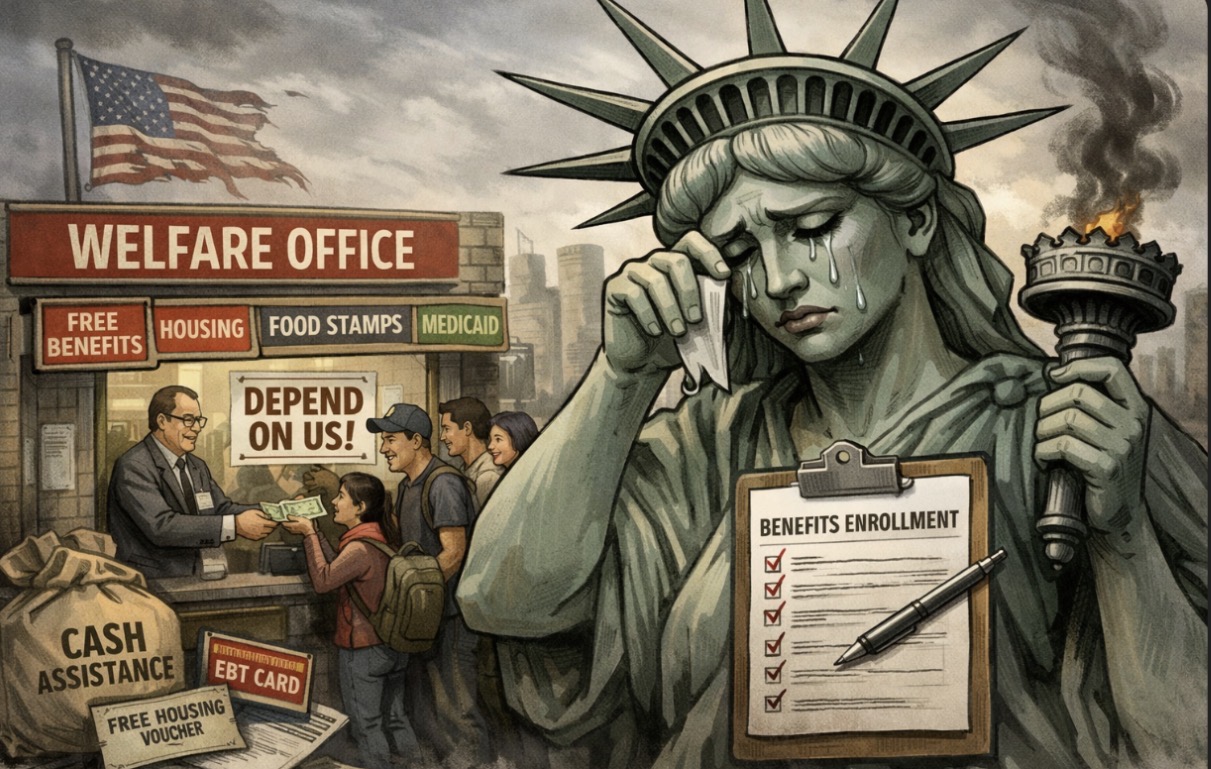
Expansion of welfare programs: Welfare programs, such as the Temporary Assistance for Needy Families (TANF), have seen expansions over the years. From a libertarian standpoint, these expansions can create a dependency on government assistance, discouraging self-reliance and personal responsibility.
Healthcare subsidies under the Affordable Care Act (ACA): The ACA expanded access to healthcare through subsidies and Medicaid expansion. From a libertarian perspective, the provision of healthcare subsidies can disincentivize individuals from taking personal responsibility for their own healthcare.
Expansion of Social Security disability benefits: The expansion of Social Security disability benefits has raised concerns about the potential for abuse and fraud. From a libertarian viewpoint, an expanded disability program can create a culture of dependency, discouraging individuals from seeking employment or pursuing alternative means of support.
Increase in food assistance programs: The expansion of programs like the Supplemental Nutrition Assistance Program (SNAP) has raised concerns about the reliance on government assistance for food. From a libertarian perspective, these expansions can diminish individuals’ incentive to seek employment or improve their economic circumstances.
Education subsidies and loan forgiveness programs: The expansion of government subsidies and loan forgiveness programs in higher education are a threat to independence. From a libertarian standpoint, such programs reduce the incentive for students to make informed choices about their education and career paths.
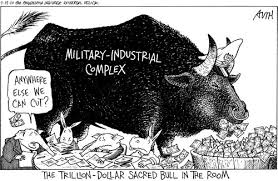
Military Spending: Libertarians raise concerns about the significant level of military spending by the federal government. We argue that maintaining a large military-industrial complex and engaging in foreign interventions not only strains the economy but also contributes to an overreach of federal power.
Defense budget and national debt: The United States has one of the largest defense budgets in the world, which has contributed to a significant portion of the national debt. From a libertarian standpoint, the high level of military spending diverts resources away from other areas such as healthcare, education, and infrastructure.
Military-industrial complex: The growth of the military-industrial complex, characterized by the close relationship between the government, defense contractors, and the military, can pose a threat to individual freedoms.
Erosion of civil liberties during wartime: Increased military spending often coincides with expanded military actions and conflicts. From a libertarian perspective, wars and military interventions can lead to a curtailment of civil liberties, including infringements on privacy rights, expanded surveillance programs, and restrictions on free speech and assembly.
Non-defensive military interventions: Libertarian thinkers express concern over the use of military resources in non-defensive interventions or nation-building efforts. We argue that such interventions often require the expansion of government power, both domestically and internationally, potentially leading to a more interventionist foreign policy and undermining the principles of limited government and non-aggression.
Opportunity cost of military spending: Libertarian thinkers often emphasize the concept of opportunity cost—the idea that resources allocated to military spending are resources not available for other purposes. Excessive military spending, in their view, diverts resources from areas such as healthcare, education, infrastructure, and individual economic opportunities. This can limit individuals’ freedom to pursue their own priorities and contribute to the overall well-being of society.

Corporate Subsidies: Libertarians criticize the practice of providing subsidies and tax breaks to specific industries and corporations. We argue that such interventions distort the market, undermine competition, and amount to corporate welfare, leading to unfair advantages for certain businesses at the expense of taxpayers. Examples incude:
Bailouts of large corporations: During times of economic crisis, the government has provided financial assistance, often in the form of bailouts, to major corporations. From a libertarian standpoint, these bailouts interfere with free markets and undermine the principle of personal responsibility. Such subsidies reward poor business decisions and create moral hazard, as companies may take excessive risks knowing that the government will intervene to save them from failure.
Tax breaks and incentives: The government often grants tax breaks and incentives to specific corporations or industries. From a libertarian perspective, this selective treatment distorts the free market by favoring certain businesses over others. Such subsidies create an uneven playing field, stifle competition, and impede the natural process of market forces determining winners and losers based on consumer preferences.
Subsidies for specific industries: The government provides subsidies to various industries, such as agriculture, energy, and transportation. From a libertarian standpoint, these subsidies interfere with market mechanisms and distort resource allocation. These subsidies artificially prop up industries that may not be economically viable otherwise, leading to inefficient allocation of resources and potential market imbalances.
Protectionist trade policies: The government may impose trade barriers, such as tariffs or quotas, to protect domestic industries from foreign competition. From a libertarian perspective, these protectionist policies hinder free trade, limit consumer choice, and distort market dynamics. Such policies restrict economic freedom, raise prices for consumers, and create inefficiencies by shielding certain industries from competition.
Cronyism and corporate influence: Corporate subsidies can perpetuate a system of crony capitalism, where influential corporations receive preferential treatment and access to government resources. From a libertarian standpoint, this undermines the principles of equal opportunity, individual initiative, and fair competition. Corporate influence over government policies can lead to regulatory capture and the concentration of economic power, limiting the economic freedom of individuals and smaller businesses.
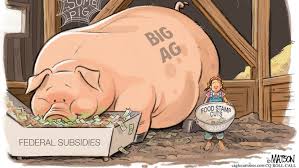
Farm Subsidies: Libertarians highlight farm subsidies as another example of excessive government spending. We contend that these subsidies benefit large agribusinesses and wealthy farmers, distort agricultural markets, and hinder innovation and efficiency in the farming sector. Subsidies like:
Direct payments: The government provides direct payments to farmers based on factors such as historical production levels and crop prices. From a libertarian standpoint, these subsidies distort market signals and interfere with the free allocation of resources. Such subsidies create artificial incentives for farmers to produce specific crops, regardless of market demand, leading to inefficient resource allocation and potential overproduction.
Crop insurance subsidies: The government subsidizes crop insurance premiums for farmers, reducing their financial risk in the event of crop failure or price fluctuations. From a libertarian perspective, these subsidies shield farmers from the consequences of their own decisions and undermine the principles of individual responsibility and market-based risk management.
Price supports: The government sets price floors for certain agricultural commodities, guaranteeing a minimum price to farmers. From a libertarian standpoint, these price supports interfere with market forces and prevent prices from adjusting naturally to supply and demand dynamics. We argue that such subsidies can lead to surplus production, market distortions, and the inefficient allocation of resources.
Conservation programs: The government provides subsidies to farmers for implementing conservation practices on their land. While conservation efforts are important, looking from a libertarian perspective you’ll see that these subsidies create a reliance on government funding and interventions in private land use decisions.
Trade and export subsidies: The government may provide subsidies to farmers to promote agricultural exports or protect domestic industries from foreign competition. From a libertarian standpoint, these subsidies interfere with free trade, distort market signals, and impede the natural functioning of global markets.

Redistributive Programs: Libertarians question the effectiveness and fairness of socialist-inspired redistributive programs, such as welfare programs and progressive income taxation. We argue that such programs, while aimed at addressing income inequality and providing a safety net, often create dependency and disincentives to work and personal responsibility. Redistribution of property like:
Progressive taxation: The federal government employs a progressive tax system, where higher-income individuals are taxed at higher rates. From a libertarian standpoint, progressive taxation is viewed as a form of wealth redistribution that infringes upon property rights and penalizes success. This discourages productivity, innovation, and entrepreneurial endeavors, as individuals may be disincentivized to pursue higher incomes due to the higher tax burden.
Social welfare programs: The federal government operates various social welfare programs, such as Medicaid, food stamps (SNAP), and housing subsidies, which provide financial assistance to low-income individuals and families. From a libertarian perspective, these programs involve the redistribution of wealth from taxpayers to recipients, often funded through compulsory taxation.
Corporate subsidies: The federal government provides subsidies and grants to corporations in various industries, ranging from agriculture to renewable energy. From a libertarian standpoint, these subsidies involve the redistribution of wealth from taxpayers to specific companies or industries, distorting market forces and undermining free competition.
Wealth transfer through regulation: The federal government enacts regulations and policies that can result in the redistribution of wealth. For example, regulations may impose costs on certain industries or require specific labor practices, indirectly shifting resources and wealth from one group to another. From a libertarian perspective, such regulations can impede economic freedom, hinder market efficiency, and limit individual choices.
Public education funding: The federal government provides funding for public education through taxes and grants. While education is considered essential, from a libertarian standpoint, the government’s involvement in education funding leads to wealth redistribution and limits the freedom of individuals to choose alternative educational options. We advocate for greater parental choice and market-based approaches to education, allowing individuals to direct their own resources towards the education of their choice.
These examples illustrate how libertarians perceive instances of excessive taxation and government spending. It may appear that there are redundancies in this article, but that only reflects the redundancies of the threats our federal government poses. It’s important to note that the perspective on what constitutes excessive taxation and spending may vary among individuals within the libertarian movement, and there may be differing opinions on the appropriate role and size of government.
On this season of Independence and freedom, let us keep the libertarian perspective on federal government erosion of civil liberties alive and kicking. Next up in the Freedom and Independence Holiday series, the Regulatory Burden from the federal government. As always… For liberty!
Thanks for any other informative blog. Where else may just I get that kind of information written in such an ideal manner? I have a venture that I’m simply now operating on, and I have been on the look out for such info.
I sometimes use ChatGPT to assist.