





How an Expanding Government Pulls the United States Toward Mass Democracy
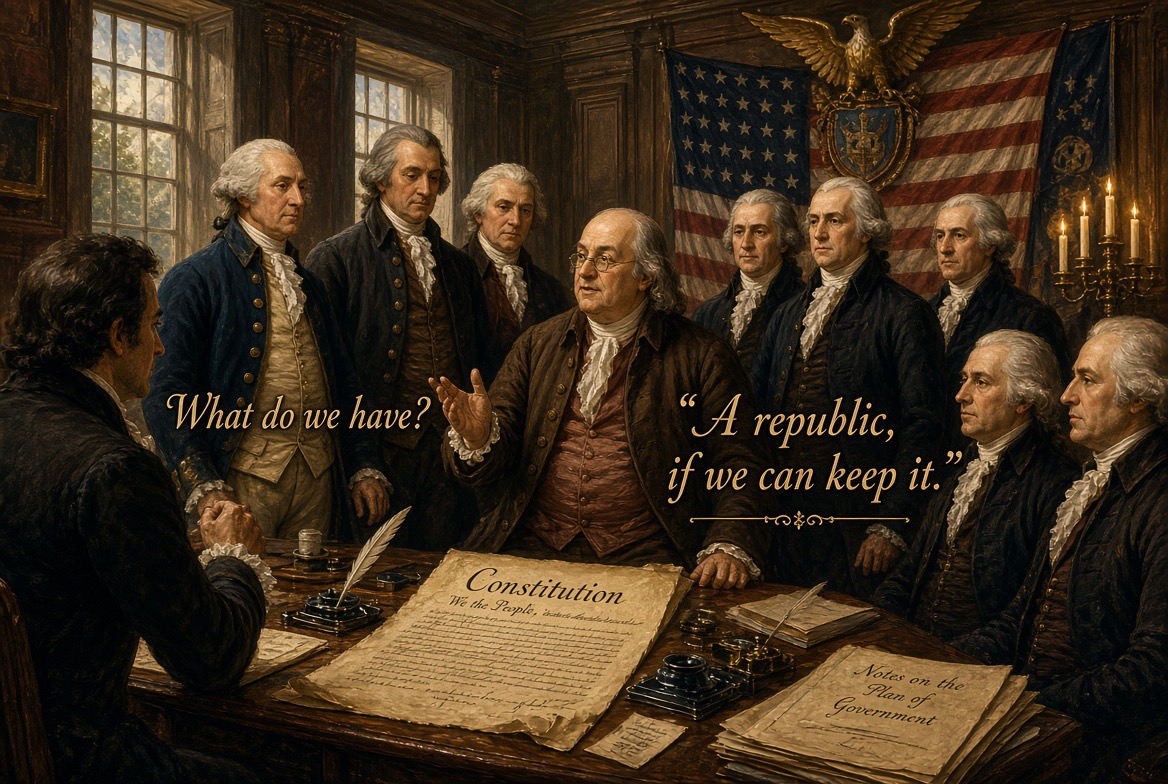
The United States was not designed as a pure democracy. It was designed as a constitutional republic: limited enumerated powers, separated branches, a Senate representing states rather than raw population, an Electoral College, and rights that majorities could not vote away.
“Pure democracy” here does not mean “people vote.” It means political power tracks headcount, appetite, and administration more than consent, law, and bounded authority. As government grows, that is the direction of travel.
1. The Founders’ warning was institutional, not snobbery
Madison’s point in Federalist 10 was that a pure democracy cannot protect minorities or property from a united majority. The remedy was a large republic with filters: representation, federalism, staggered terms, and a written limit on what government may do.
Those filters have been thinned. The government did not stay small enough for the filters to matter.
2. The Progressive turn: more voters, fewer intermediate bodies
The early-20th-century Progressive project was explicit: more direct popular control, less mediation by states and legislatures.
The 17th Amendment (1913) is the cleanest example. Senators stopped being chosen by state legislatures and started being chosen by statewide popular vote. That made the Senate more democratic. It also removed the states as a formal check inside Congress. Senators became larger-district politicians, not agents of state governments.
The same era added the income tax, the Federal Reserve, and the first modern administrative agencies. Direct election plus a national fiscal machine is how mass politics funds itself.
State-level initiative, referendum, and recall pushed the same logic downward: law by petition rather than by a deliberating legislature.
3. Expansion changed what majorities vote about
A small republic votes on few things. A large administrative state votes, in effect, on everything.
Federal outlays sit near the low-20s percent of GDP in recent years (about 23% in FY2025), after a COVID spike near 29–31%. Combined federal-state-local spending is far higher than the early-1900s level of single-digit shares of GDP.
The composition matters more than the headline. Discretionary spending — the part Congress actually appropriates each year — has fallen as a share of the economy. Mandatory spending — Social Security, Medicare, Medicaid, and related transfers — has risen. In the early 1960s mandatory spending was under 5% of GDP; recently it has been around 14% plus, with health entitlements a large and growing slice.
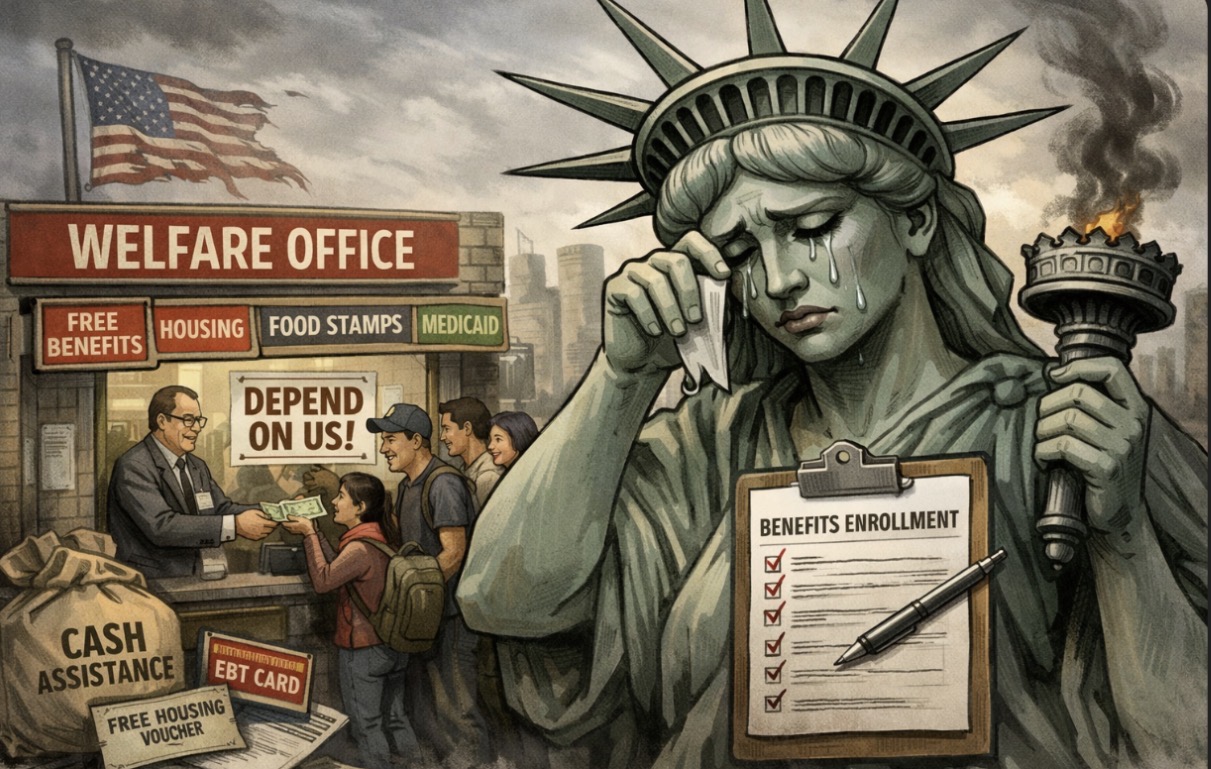
That is mass-democracy economics: benefits that are hard to vote away, financed by a broad tax base and by debt, administered by agencies rather than by a session of Congress. The “people” do not write the rules. They ratify a client relationship.
4. The administrative state is democracy without a vote
Pure democracy is often imagined as a crowd with its hand up. The American version is more often a bureau with a rulebook.
Congress passes vague statutes. Agencies write the binding detail. Courts defer or delay. The citizen meets the state as a form, a license, a guidance document, a grant condition — not as a representative he can fire this November.
Headcount at the federal civilian level still runs in the low millions depending on what you count (executive civil service near 2 million; broader BLS “federal jobs” figures higher). Recent cuts change the payroll. They do not automatically shrink the span of control: welfare formulas, regulatory codes, and intergovernmental grants can govern more people with fewer clerks.
That is how government becomes “more democratic” in the worst sense: more of life is political, but less of it is decided in a room where a voter can see the tradeoff.
5. Representation follows bodies, not consent
House seats and electoral votes are apportioned by total census population — “persons,” not citizens or voters. That is the 14th Amendment’s text as currently applied. Non-citizens therefore affect the weight of states and districts even when they cannot vote. Estimates of how many seats that moves vary by study and by whether one counts all non-citizens or only the unauthorized; the mechanism itself is not in dispute.
Pair that with:
- internal migration away from high-regulation jurisdictions,
- sanctuary and benefit policies that change who stays,
- universal mail ballots in some states with identity checks that verify a number more than they verify citizenship,
and you get a system that treats population as electoral inventory. That is closer to headcount democracy than to a republic of consenting members.
A republic asks: who is in the political community, and what may they do to each other?
A mass democracy asks: how many are present, and what can the coalition extract?
6. Why expansion and “pure democracy” travel together
They feed each other.
- Larger government creates more clients, contractors, and regulated industries. Those groups vote and lobby to keep the machine.
- Broader suffrage and weaker filters make it easier to campaign in benefits and identities rather than in limits.
- National media and national parties flatten local difference. The median national coalition matters more than the county.
- Federal grants and conditions let Washington buy state policy, so “local democracy” becomes administration with a local letterhead.
The result is not Athens in the agora. It is a continental welfare-regulatory state that speaks in the language of “the people” while operating through agencies, formulas, and lists.
7. What this is not
It is not an argument against voting.
It is not a claim that 2020 or any one election was “stolen” by this mechanism.
It is not a claim that every expansion of the franchise was a mistake.
It is the narrower point: as the state grows, politics becomes a contest over the distribution of the state’s product. That contest rewards numbers, not limits. A republic can survive majority elections. It cannot survive majority elections plus an unlimited administrative claim on life and livelihood.
8. Ancapistan conclusion
A nation is a people with a bounded political home. A state is an apparatus. When the apparatus expands, it prefers the counting rule that maximizes its constituency: more persons on the books, more transfers, more rules, more federal supervision of the methods that produce the count.
That is why the fight is never only “Democrat vs Republican.” It is republic vs mass-administration:
- rights that do not expire when the coalition changes,
- representation tied to membership and consent,
- government small enough that losing an election is not a civilizational event.
The closer we get to “whatever the larger pile of dependents and administrators can enact,” the less the United States is a republic — even if every box is still checked on Election Day.
Always for liberty.
🦅 ANCAPISTAN